

Agile approaches support the thesis that face-to-face communication is the most effective way of transferring information. The effectiveness of different media is shown in the table below. Collocation
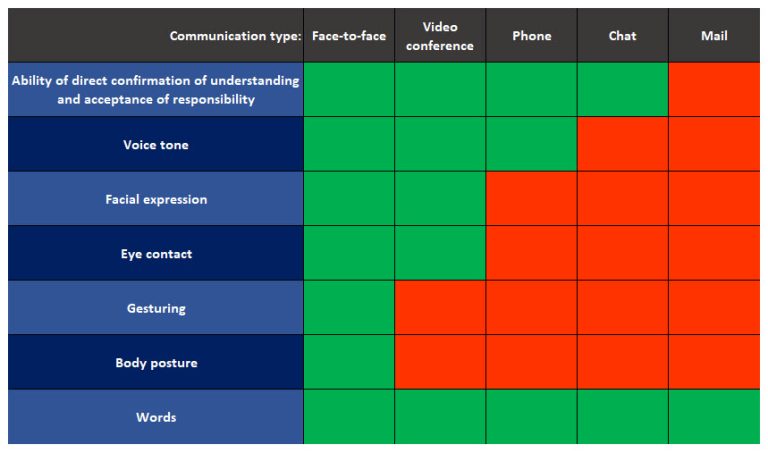
Constant (and effective) communication is advocated by the first value of the Agile Manifesto:
“Individuals and interactions over processes and tools”
Collocation
To ensure the most effective type of communication within and between teams, Agile approaches recommend collocation. In practice, this means team members work in a shared space. This includes developers, Scrum Masters, and Product Owners.
Saab, which developed one of the most complex products – the Gripen fighter jet – using an Agile approach, is an example of such collocation. Due to their multidisciplinary nature, teams were often located directly next to the aircraft prototype. Pilots were part of teams developing flight simulators or planning the cockpit.

In Agile manufacturing, multidisciplinary teams are also often located in the same space as production.
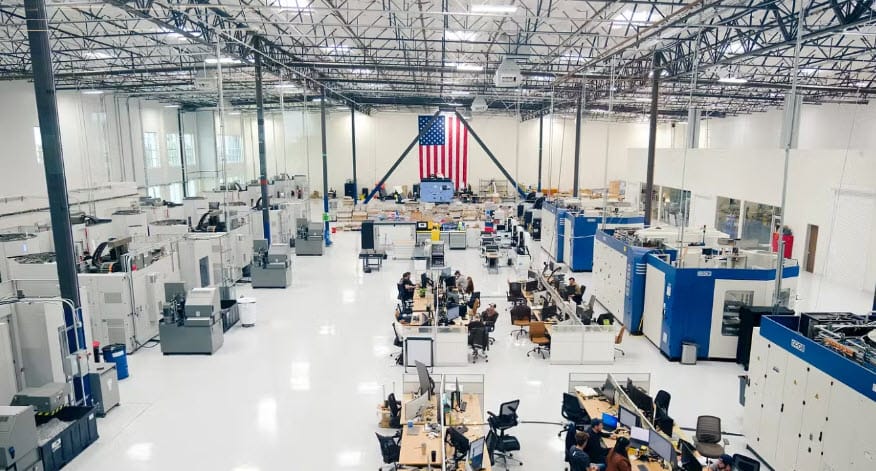
The level of collaboration that collocation provides is simply not possible with remote team members.
Osmotic Communication (Learning)
One of the advantages of collocation is osmotic communication. This is unconscious learning, that team members are exposed to, when working in an open shared space.
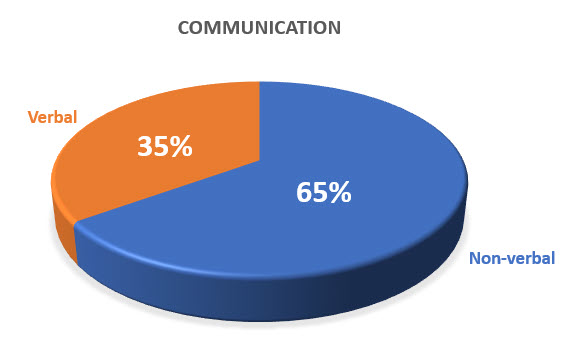
Practice has shown that a beginner sitting near an experienced developer progresses faster than working alone or with other beginners. The reason for this isn’t just the coaching or mentoring provided by the experienced colleague, but also the continuous reception of information not directly intended for the listener. Examples include how to react to problems, work attitude, the manner and breadth of stakeholder communication, time devoted to specific development phases, meeting frequency, testing frequency, etc.
Scaled Agile frameworks LeSS and Scrum@Scale go so far as to suggest the following alternatives to creating distributed teams:
- Additional training for collocated team members to fill knowledge gaps, even though this knowledge might already be available from potential remote members. The time and cost of training should quickly be recovered through the benefits of a fully collocated team.
- Segmenting products or more independent parts of a single product by physical locations. The overhead associated with coordinating between segments is again offset by the benefits of collocation.
Osmotic learning isn’t left to chance. The workspace needs to be arranged in a way that enables osmotic communication. It’s also necessary to consider which teams would be most beneficial to locate close together. Agile development teams often work at a large shared table with the option to isolate in an adjacent room (Caves and Commons).

The osmotic thinking approach is particularly useful during onboarding when we sit a new employee near experienced team members with the skills the newcomer needs. After all, this additional way of information transfer also partially reduces the mentor’s burden.
In general, the advantages of osmotic communication can be summarized as follows:
- Enables non-intrusive information spread within the team
- Helps in earlier error detection
- Reduces the need for activity coordination within the team
- Enables more frequent feedback
- Enables better understanding of personality traits and life situations of other team members
Dilemmas Regarding Collocation and Osmotic Communication
Osmotic communication cannot replace formal communication channels and Agile ceremonies. It’s only their complement. An organization cannot rely on, for example, a new policy “somehow” spreading among employees. Such a pattern might indicate that management doesn’t want to take potential responsibility for the delegated change.
Osmotic communication and learning are bonuses provided by collocation, not substitutes for purposeful communication.
Another dilemma regarding team collocation is the question of collocation itself – namely open offices. Do they really bring benefits to employees? Let’s take a step back. We are assuming osmotic communication is beneficial, but the question is whether this benefit outweighs the potential negative aspects of working in an open office.
In today’s world, it’s hard to imagine a development organization where each team member would have their own office. I personally don’t know of any. The concept itself seems foreign to us.
Organizations began implementing open floor plans after World War II because it made it possible to fit more workstations into the same square footage. Office space rental represents a significant cost. The logic is understandable.
In the decades that followed, the business model of most organizations evolved from “command and control” to more democratic forms of leadership. However, open offices remained. A legitimate question is whether such a layout still aligns with modern needs.
In recent years, several studies have been conducted regarding the suitability of open offices. Here are some surprising findings:
- Employees lose an average of 86 minutes daily due to disruptive external influences (source).
- 9 out of 10 employees experience higher stress levels. There is a higher incidence of high blood pressure and higher employee turnover.
- 95% of employees occasionally desire more privacy at work. Only 41% have it.
- 62% more sick leave absences (source)
- 15% lower productivity
- 32% lower general employee satisfaction

On the other Hand...
…studies again. The following describe the advantages of Agile offices. Collocation isn’t automatically an Agile office. While these advocate employee collocation, they also add elements such as “Caves” – spaces for isolated work, larger common spaces for ceremonies and similar. The idea and implementation of an Agile office is beyond the scope of this article; we learn about it in more detail in my Agile & Lean for Developers course.
Studies regarding the advantages of Agile offices say the following:
2022 Gartner:
- 34% higher employee productivity
- 30% greater employee engagement
2021 Steelcase:
- 40% less time spent looking for meeting space
- 28% lower employee stress
2022 Lessman:
- 22% higher employee retention
2023 CBRE:
- 30% lower office rental costs
Conclusion
If we want to leverage the benefits of osmotic communication and learning, we must collocate team members. While collocation may have potentially negative impacts on employees, with proper implementation in the direction of an Agile office, these impacts are neutralized or turned positive.
The benefits of collocation are also present in formal communications, as face-to-face communication is by far the most effective communication medium. Organizationally, the benefits of collocation are also reflected in lower decision latency, which is a common obstacle to the Agile way of working.